I'd like you to think about the people you know. Not the people that you hear about on the news, or whose comments you've read in that YouTube feed; I'm talking about the people you have person-to-person relationships with: friends, family, neighbors, coworkers, people in your church. Are they morons? Or are they more or less smart and thoughtful? Are they hateful, selfish, and wicked, or do they try to do good and -- most of the time -- succeed?
Now think about that other group of people: the people you know through news and rumor, the people you know through sound bites on forums. The people you know only through other people. Are they more or less wise than the people you know personally? Are they more or less virtuous?
I'll go first: the people I know are imperfect, but they're fundamentally kind and decent. They try to consider their actions and do the right thing -- even the people I don't agree with or even get along with all that well. In contrast, many of the people I encounter online or in the news, or hear about through word of mouth, seem stupid, uncaring, and venal.
Since I can't get all of your perspectives before finishing this piece, I'll make an arrogant assumption: you're all like me. You think that the people you know are mostly good, and you think a lot of other people mostly aren't.
I bet if I sought out the people we both think are uncompassionate idiots, they would answer the same way too.
There are a couple of possible explanations for this situation. For instance, it's possible that society is partitioned into groups of people who are either almost all good or almost all bad. However, the people in the bad groups are so out of touch that they don't know it, so they report the people in their own in-groups as good.
Another possibility is that the people in each group have basically the same characters as those in all the others. If that's the case, then the real culprit in our poor impressions of one another isn't that other person; it's us. We don't do a good job of understanding one another's perspectives. Perhaps we also don't do a good job of presenting ourselves and our values to others.
Before you smirk and answer that of course it's the first one, remember: you can't tell the difference. If you're in a cadre of assholes, your standards and values are so debased that you don't even know it. Sorry.
Presumably, you'd like to give yourself the benefit of the doubt. This holiday season, consider granting the same benefit to others.
Thursday, December 6, 2012


Sunday, October 14, 2012
Catholicism's Priests vs. Its Prols: a Failure to Communicate
in categories:
values
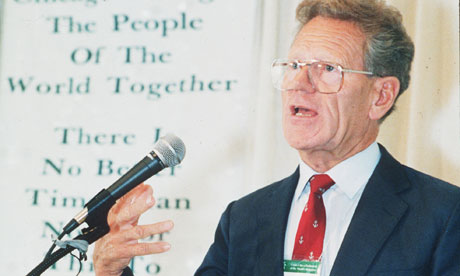 |
| Hans Küng. Image credit: The Guardian |
I have often observed a specific flavor of theological doublethink among ex-Catholics (and as someone who was raised Protestant, married Catholic, and is currently a practicing atheist, I feel free to point it out): on the one hand, they no longer accept many of the Church's core teachings, and may even routinely attend the services of another religion. On the other, they simultaneously believe that the Church remains the sole source of spiritual and moral truth. These semi-lapsed Catholics thus long for their Church to follow them; they feel their new homes in Episcopalianism, Methodism, or non-observant agnosticism to be a kind of exile.
Sunday, September 23, 2012
The Politics of Intellectualism
in categories:
values
It is a very old saw that America's Right likes to tell of its Left, that the latter is full of elitist intellectuals, while the former is comprised of lovable, down-home, we-don't-need-no-book-learnin' types. This story is ironic, because the appeal of, and appeals by, modern social progressivism are almost entirely emotional and pre-intellectual; it is the Conservative Movement that builds grand theories.
Saturday, September 15, 2012
iPhone 5 and Its Missing NFC
in categories:
tech
There's a scene in Will Smith's movie "Hitch" in which two hipsters try to impress a woman by rattling through a list of the top new restaurants and venues in the city and pronouncing each one in turn to be disgusting. I thought of that scene as I read a stream of articles on the new iPhone 5 this past week. These articles generally agree on two points:
- Compared to the previous-generation iPhone 4S, the iPhone 5 has a processor that's twice as fast, networking that's twice as fast, a camera that's twice as good, a screen that's 20% larger, and a brand new look -- while reducing weight and improving battery life. It also ships with a new generation of iOS. Together, these new features make the iPhone 5 exactly the same as the iPhone 4S, which is just. so. boring.
- The new iPhone also has a completely new dock connector, which compared to the previous one and to competing technologies is dramatically smaller and thinner, which in turn allows devices to be smaller and thinner. It's also faster, more flexible, and easier to use. This reckless abandonment of nine-year-old technology is a scandalous insult to Apple customers and to democratic values, demonstrating once and for all the cynical depths to which Apple has fallen following the death of Steve Jobs, may God have mercy on his soul.
Sunday, September 9, 2012
What Government Is For
in categories:
masterplan,
values
Americans are going to hear a lot about The Proper Role of Government in the coming months as we work through this election season. As one who is prone to over-analysing just about everything and naturally distrustful of the very concept of the political party, I thought I ought to lay it out myself.
Any just government must provide its citizens with four critical services.
Any just government must provide its citizens with four critical services.
Monday, September 3, 2012
Brutal Onion Coverage of the Republican Convention
in categories:
values
From this past week:
- Things That Shouldn't Be Said In Modern Society To Be Said At Least 1,400 Times At RNC
- RNC Builds Levee Out Of Poor People To Protect Convention Site
- GOP Convention To Feature Strong Lineup Of Conservative Women Listeners
- Gay Marine Beaten To Bloody Pulp To Fire Up RNC Crowd
- Romney's Acceptance Speech To Avoid Mentioning Personal, Professional, Religious, Political Life
- Best They Could Get Accepts Republican Nomination
- John McCain Just Blew His Brains Out During RNC Speech
"Tonight we come together in this hall to support the next president of the United States, Mitt Romney," said McCain, who then shook his head, wiped beads of sweat from his brow, and muttered "Mitt Romney" to himself in a tone that many identified as troubled and confused. "Mitt Romney is a, uh ... is a man of great moral character who stands for the sort of values this great party embodies—fairness, tolerance, giving the average American a chance. Mitt Romney is a hero."
"Folks, I can’t do this," McCain added. "I just can't do this anymore."
Sunday, September 2, 2012
Yes, a Federated Twitter Is Possible
in categories:
tech
Dan Wineman asks whether a federated Twitter is possible (via John Gruber). By this he means whether it is possible for a network not governed by a single authority to provide a qualitatively similar experience to Twitter. In his words:
The slightly longer answer is It Depends.
The much longer answer follows.
The short answer is Yes.
- Immediacy: if a post has been made by someone I follow, I can see it in my timeline right away (or close enough that I don’t notice the difference).
- Chronology: posts always appear in order by time posted.
- Monotonicity: timelines grow only from the top; older posts are never retroactively inserted.
The slightly longer answer is It Depends.
The much longer answer follows.
Thursday, July 12, 2012
A Smaller iPad?
in categories:
tech
The blogosphere is abuzz with rumors that Apple will release a smaller version of the iPad to compete more directly with Amazon's Kindle Fire and the soon-to-be-released Google Nexus 7. The key questions are:
- Will Apple release such a tablet?
- If so, when?
- ...And for how much?
Saturday, June 16, 2012
The Case for Human Space Exploration
in categories:
economy,
masterplan,
tech,
values
“We have been given hands to touch the miraculous. We have been given hearts to know the incredible. Can we shrink back to bed in our funeral clothes? Mars says we cannot.”
-- Ray Bradbury, Too Soon from the Cave, Too Far from the StarsThe Dragon spacecraft has completed its historic mission to the International Space Station and returned safely to Earth. Though SpaceX, its designer, says that the vehicle can be rapidly repurposed for manned missions in the future, there were no humans aboard.
The reasons to send robotic craft into space are numerous. The reasons to send human beings into space number very few: because we must; because it is our destiny. Because our history as a people is a history of exploration -- we will cease to be ourselves if we do not go to space, and we will be changed when we do; such is the nature of life.
Saturday, June 9, 2012
TV Is a Service
in categories:
entertainment,
tech
Today, "TV" proximally means one or both of two things:
- A large glass panel on which moving pictures are displayed, and/or
- A network of distribution interests responsible for choosing which of those pictures should appear on which of those screens at which times.
Thursday, May 31, 2012
Powers Great and Small
in categories:
values
It may be said with rough accuracy that there are three stages in the life of a strong people. First, it is a small power, and fights small powers. Then it is a great power, and fights great powers. Then it is a great power, and fights small powers, but pretends that they are great powers, in order to rekindle the ashes of its ancient emotion and vanity. After that, the next step is to become a small power itself.
-- G.K. Chesterton, Heretics, 1905
Sound like anyone we know?
Saturday, May 26, 2012
Attention Span
in categories:
values
My favorite radio program, This American Life, covered the 1982 massacre in Dos Erres, Guatemala. Those few among the perpetrators who have been brought to trial have each been sentenced to over 6,000 years -- 30 years for each man, woman, and child murdered. And I thought: what if we made them serve it?
I'm not speaking of a fictional world in which criminals live for 6,000 years. I am speaking of a fictional world in which the living remember for 6,000 years. We dig up the graves of Egyptian kings and send their bodies around the world to be photographed and gawked at. Suppose we also kept the bodies of Egyptian murderers, never buried, in locked boxes -- unshipped, unphotographed, and ungawked. "Here stands ____, who on the twelfth day of the third month of a year 3,879 years before the birth of a man later deemed a god did rob, rape, and kill 202 people: ____ and ____ and ____ and.... Not to be released until March 12, 2181."
The living would fail at that project. They have not the fortitude for it. It feels just to say to the families of victims, "The murderer will pay with one lifetime for each he took." But the punishment of the dead weighs lightly upon the dead and heavily upon the living. The criminals would become celebrities, celebrated alongside the kings (even when the two were not the same to begin with). The cost of maintaining them would be astronomical, and within less than a millennium would dwarf that of maintaining living prisoners. And under such conditions, their sentences would inevitably become political chess pieces.
Remembrance is an investment, and grief, and punishment. Each pays its dividends, and each carries its price.
I'm not speaking of a fictional world in which criminals live for 6,000 years. I am speaking of a fictional world in which the living remember for 6,000 years. We dig up the graves of Egyptian kings and send their bodies around the world to be photographed and gawked at. Suppose we also kept the bodies of Egyptian murderers, never buried, in locked boxes -- unshipped, unphotographed, and ungawked. "Here stands ____, who on the twelfth day of the third month of a year 3,879 years before the birth of a man later deemed a god did rob, rape, and kill 202 people: ____ and ____ and ____ and.... Not to be released until March 12, 2181."
The living would fail at that project. They have not the fortitude for it. It feels just to say to the families of victims, "The murderer will pay with one lifetime for each he took." But the punishment of the dead weighs lightly upon the dead and heavily upon the living. The criminals would become celebrities, celebrated alongside the kings (even when the two were not the same to begin with). The cost of maintaining them would be astronomical, and within less than a millennium would dwarf that of maintaining living prisoners. And under such conditions, their sentences would inevitably become political chess pieces.
Remembrance is an investment, and grief, and punishment. Each pays its dividends, and each carries its price.
You must pay for everything in this world, one way and another. There is nothing free, except the grace of God.
-- Mattie Ross, "True Grit"
Thursday, May 3, 2012
All the Children are Below Average
New research suggests that the canonical bell curve doesn't accurately characterize human performance. We aren't a small group of low performers, a small group of high performers, and a large group of average folks doing most of the work from the middle. In fact, in many areas, a small number of very high performers produce a disproportionate percentage of all output; the mean is much higher than the median.
In other words, in a meritocracy, the emergence of The One Percent is expected, and not just when it comes to finance.
What are the implications for our democratic values?
In other words, in a meritocracy, the emergence of The One Percent is expected, and not just when it comes to finance.
What are the implications for our democratic values?
Tuesday, March 27, 2012
"Extensible Types" Spec Finalized at OMG
in categories:
tech
Cross-posting from my RTI blog:
I’m very pleased to announce that the much-anticipated “Extensible and Dynamic Topic Types for DDS” (DDS-XTypes) specification has finished its finalization process at the Object Management Group (OMG) meeting that just completed in Reston, VA. As the lead author of the spec and chair of the finalization process, I for one am excited by what we’ve accomplished and where we’re going with this technology.
This spec represents RTI’s commitment to open systems: we’ve taken a lot of our longstanding work on XML support and dynamic data typing and pushed it into public documents for anyone else to implement. Portability and interoperability are good for our customers, and they’re good for RTI.
DDS-XTypes represents a broad set of new capabilities, and we’re hard at work implementing it. We’ve got portions already available in our shipping product today. And we’ve got significantly more available in early-access form, which will be released generally later this year.
Friday, March 16, 2012
On Insurance: Follow-Up
I recently posted on the subject of health insurance and contraceptives. One aspect that I did not cover in that post is the financial one: how do we pay for health care, and which ways lead to better financial outcomes? Let me get into that now.
Saturday, March 10, 2012
Dear Target: Don't Be Evil
There was an interesting article on NYTimes last month about how Target uses the data it gathers about you to guess -- very accurately -- whether you're pregnant. The fact that companies do things like this should not come as any surprise; what did you think those club cards were for, anyway? But one bit jumped out at me:
A class act, guys, really. Did you feel proud of yourselves when you came up with that stunt?
“We have the capacity to send every customer an ad booklet, specifically designed for them [...].
“With the pregnancy products, though, we learned that some women react badly,” the executive said. “Then we started mixing in all these ads for things we knew pregnant women would never buy, so the baby ads looked random. We’d put an ad for a lawn mower next to diapers. We’d put a coupon for wineglasses next to infant clothes. That way, it looked like all the products were chosen by chance.
“And we found out that as long as a pregnant woman thinks she hasn’t been spied on, she’ll use the coupons. She just assumes that everyone else on her block got the same mailer for diapers and cribs. As long as we don’t spook her, it works.”In other words: Target got explicit feedback that their customers hate being spied on. They think it's creepy. They get very angry. How did Target respond? Rather than respecting their customers by not doing the thing those customers told them not to do, they acted to deliberately obscure their creepy behavior.
A class act, guys, really. Did you feel proud of yourselves when you came up with that stunt?
Sunday, March 4, 2012
Who Has the Right? On Insurance and Contraception
We're in the middle of a heated debate about contraception, and who pays for it, sparked by a provision in the recent health care law requiring health insurance providers to cover contraception. I have heard a lot of disgusting hate speech, and I have heard a lot of entitlement that is ugly in its own way. Both groups of speakers exclaim loudly about their rights, and neither listens too closely to what the other is saying. I could add my voice to this debate with a one-liner on Facebook; that would serve to identify which camp I belong to. Since I've never liked the idea of choosing camps in the first place, I'm going to tell you what I actually believe. Read ahead at your own risk.
Monday, February 27, 2012
On John Kennedy and Throwing Up
in categories:
values
When John Kennedy ran for president, he gave a speech about the separation of church and state and about anti-Catholic sentiment. Rick Santorum wants to throw up when he hears it. Why?
Because the first line, first substantive line in the speech says, "I believe in America where the separation of church and state is absolute." I don't believe in an America where the separation of church and state is absolute. The idea that the church can have no influence or no involvement in the operation of the state is absolutely antithetical to the objectives and vision of our country.
This is the First Amendment. The First Amendment says the free exercise of religion. That means bringing everybody, people of faith and no faith, into the public square. Kennedy for the first time articulated the vision saying, no, faith is not allowed in the public square.This is incredibly important, and not because Rick Santorum said it. (I happen to believe that his values are far outside the American mainstream, and I would hate to see him as my president. But that's a post for a different day.) This statement is important because it highlights two very different concepts of what church/state independence should look like. The American legacy on this issue is quite different than that of much of the rest of the world, and it bears some emphasis.
Saturday, February 25, 2012
Big Data for Dummies
"Damn, that rock is heavy."
-- Grrrg, son of Booog, discoverer of The Big Data Problem
Big Data is big business, and all the nerds are talking about it. Since many of my readers are not nerds (and I mean that in the nicest way), I'd like to break down what Big Data is, and then I'd like to put it in a historical context that I think has been somewhat neglected.
People and devices are more connected than ever before. Fortunately for you, you represent only one of those people, and you have only a handful of devices and a few friends. All of your data, and all of the relevant data from the people you care about, fits in less than a cubic foot on your desk. If you search for a particular piece of information stored there, your computer can find it in a couple of seconds. Congratulations; you're doing fine: you don't have a Big Data Problem.
Your ISP has tens of thousands of customers just like you. LinkedIn had 100 million members as of a year ago. Facebook has almost 900 million members. And They. Save. Everything. In other words, they have 5-10 orders of magnitude more data than you do. That's far too much to store in one place, and if they searched their data the way you search yours, your one-second search would take them a week. If you typed a query into Google.com and had to wait a week for your search results to come back, you'd be pissed -- like, really pissed.
That, my friends, is a Big Data Problem.
Wednesday, February 8, 2012
Apple's TV, Again
in categories:
entertainment,
tech
I wrote last spring about the persistent rumors that Apple is working on a TV set. (Steve J. himself later confirmed that something TV-related is in the works.) Re-reading my piece, I think I got a few things right. For example, Apple will not get into the business of selling giant pieces of phosphor-coated class beyond the traditional computer screens it sells today. But I sold the vision short. I didn't get it. Then today I read this article in The Globe and Mail (via John Gruber).
How could I have been. So. Blind.
It's not about the TV screen. It's about the connections.
How could I have been. So. Blind.
It's not about the TV screen. It's about the connections.
Subscribe to:
Posts (Atom)