Friday, December 26, 2008

One or Two Things to Add

A friend sent me a link to John Hodgman's blog. In addition to being more portly and more famous than I, Mr. Hodgman is also apparently more articulate. He has written an excellent response to the selection of that Other Guy to speak at Obama's inauguration. He has said most of what I would like to have said, but better. Curse his tiny round head.

I have just one or two things to add to the conversation.

I would like to begin with incredulous agreement. The Other Guy is not a moderate; I have never considered him one, and I would hope that not too many others have made that mistake. He's not well-known and well-respected for being The Moderate; he's known and respected for being The Conservative You Can Talk To. He's the megachurch pastor who talks to the people who disagree with him instead of chasing after them with stakes and torches. He's the prominent Christian leader who actually devotes the majority of his agenda to the agenda of Christ -- physical and spiritual poverty -- rather than to loud arguments about whether birth control measures that prevent fertilization vs. implantation a split second later are morally distinct, and whether using the latter is equivalent to shooting a two-year-old in the face.
[The fact that charity and dialogue garner so much attention says something about some of the holier-than-thou navel-gazers in Warren's line of work and perhaps offers some clue as to the low regard in which Christians tend to be held among many non-Christians. But I digress.]
But if you think that these things make him a moderate, you have made the same mistake as those who argue against dialogue with America's political adversaries: conversation with someone does not imply that you agree with their views or condone their actions. It does not mean a softening of position or an expectation that one party will change the other's mind. If you have this expectation, you will be disappointed. It means simply that both parties feel that they will benefit from the relationship and that they are willing to work on common interests.

And Warren and Obama do have common interests. I expect you share many of these interests with them. To quote from one of Warren's web sites:
Dr. Rick Warren is passionate about attacking what he calls the five “Global Goliaths” – spiritual emptiness, egocentric leadership, extreme poverty, pandemic disease, and illiteracy/poor education. His goal is a second Reformation by restoring responsibility in people, credibility in churches, and civility in culture.
Disagreement, anyone?

Warren has said some truly grotesque and reprehensible things about gay relationships, comparing them to incest and pedophilia. He has made other parallels I find repugnant, such as comparing pro-choice people to Holocaust deniers. But he has done great good in the world as well, such as by raising the profile of those suffering from HIV/AIDS in the developing world, combating poverty, and protecting our environment. And he has not just outlined an agenda verbally; he has the financial and human support to drive that agenda.

Does the good outweigh the evil? I have yet to decide, though I am leaning No. But I think it's naive to consider Obama's decision an obvious one, either for or against. The fact that both Left and Right are condemning the choice, but for opposite reasons, tells me that this is a debate we need to have.

Thursday, December 18, 2008

You Love Me

Thank you thank you no really it's too much no thank you God bless.

Tuesday, December 2, 2008

Hire a few grumpy people...

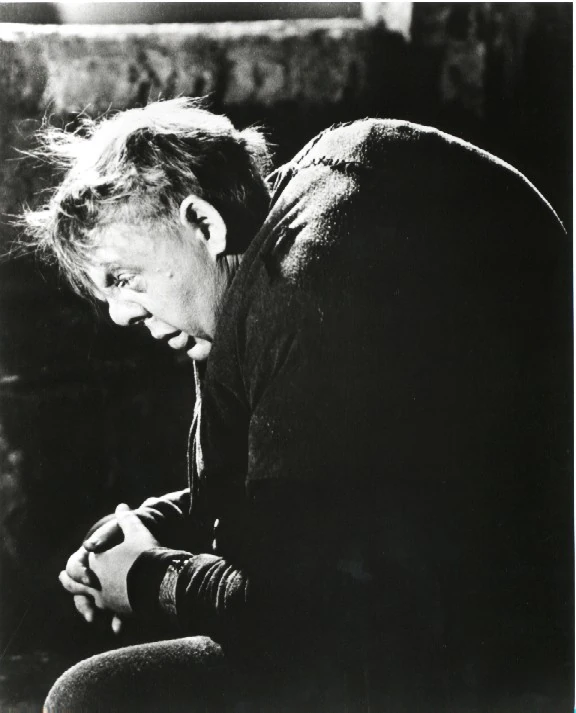
Hunchback
My boss has brought in a trainer today to teach us all how to argue with each other more in order to spur us to be more creative. (I never thought that insufficient disagreement and arguing was a particular weakness of my coworkers and I....) My favorite tidbit:
Hire a few grumpy people, but keep them away from other people in the company most of the time because emotions are so contagious. When you need their expertise, bring them out briefly and then send them back into isolation.

Saturday, November 15, 2008

Discrimination by any other name

I made a strong claim the other day: that homophobia is morally equivalent to racism. Not everyone would agree with that. Indeed, black leaders have responded forcefully against it after being criticized for the large number of people of color who voted in favor of Proposition 8 in the recent California election. I’m going to argue systematically that in fact the equivalence is valid. By means of a framework, I'll use a speech from 2001 in which George Yancey, a black Christian college professor, argues against it. The speech is not recent, but it is comprehensive and well argued, and therefore forms a strong counterpoint to my argument.

The argument against the moral equivalence of homophobia and racism has several bases; I will address each in turn.
  1. Prejudice of different kinds -- racism, sexism, and homophobia, for example -- have different meanings to the people who experience them because of the different histories of these types of discrimination and the different world views of the people who experience them. It is therefore incorrect to suppose that, because someone understands or has experienced one kind of discrimination, that he or she will automatically relate to those who experience another kind.
  2. The victim of racism cannot hide the basis of the discrimination. For example, a black person cannot pretend to be white to avoid discrimination. Homosexuals, on the other hand, can hide their orientation.
  3. Black and Hispanic communities are economically disadvantaged relative to white communities. Most surveys of gays, on the other hand, show them to have higher-than-average incomes.
  4. Homosexuality, unlike race, is a chosen behavior, not an inborn characteristic. Two pieces of evidence for this proposition are put forward: One, that homosexuality does not promote the passing on of one's genes, and therefore cannot be evolutionarily adaptive, and two, that some gay people have been ceased living as homosexuals and have gone on to have apparently successful heterosexual relationships. Furthermore, as a chosen behavior, there is a moral dimension to homosexuality that is not relevant to membership in a racial group. Specifically, homosexuality is condemned by Christian scripture.
I find the first claim -- that different people experience prejudice differently, and hence do not always understand members of other disadvantaged communities, to be generally valid and agreeable. Professor Yancey presents several strong examples of this claim, with which I find no fault.

However, I am not particularly or primarily concerned with whether the victims of discrimination understand one another or can be viewed as a single community. Rather, I am concerned with the morality and ethics of discrimination itself. Can a society that values fairness, equality, and justice accept pervasive discrimination of any form?

This brings us to the second claim, that gay people can hide their orientation in ways that members of racial minorities cannot. In general, this claim is false. Historically, many blacks and Latinos have passed as white to avoid discrimination and better protect and provide for their families. The emotional scars often left behind are instructive. It is undeniably true that many more -- perhaps all -- gay people can pass as straight than black people can pass as white. But discrimination should not be defended or discounted on the basis that the victim can avoid it by lying about his identity and relationships. If you are able to evade my attempts to discriminate against you, good for you -- it does not diminish the fact that I intended to do so.

The economic argument, ironically, is related to the "passing" argument. Specifically, no study can compare the population of gay people with the population of straight people. A study can only compare the population of those who acknowledge being gay to the population of those who do not. Closeted gay people will, by definition, end up in the wrong column.

Consider the risks that a person takes by leaving that closet. He or she risks alienation from friends and familyworkplace discrimination, and physical violence among other things. Now consider whether someone is more or less likely to take these risks if he or she has more financial resources than average or fewer. See the problem?

But all of this discussion is just noise. Now we get to the real issue. Many Americans, in many states, have voted to discriminate against their gay neighbors because they believe those neighbors to be perverts -- and on purpose. Gay marriage will not be accepted until that view changes.

I believe that the "gay choice" view does not hold water, but you don't need to take my word for it. Ask your gay friends, neighbors, and coworkers. Every one of them was raised as a child to assume that he or she would be straight, and every one came to the opposite conclusion. Ask them whether they had a choice.

The genetic argument has a certain logic to it. It's logical, but it's not true. In fact, homosexual behavior has been documented in many animal species, including both sex acts as well as pair bonding. Do ducks, sheep, and apes choose to be gay?

Homosexuality is condemned in Christian scripture -- in the book of Leviticus. What other part of Leviticus does any Christian take seriously today? We eat pork and shellfish. We wear clothes of mixed fibers. Paul speaks against homosexuality in Romans and 1 Corinthians; 1 Corinthians also contains rules about how men and women should wear their hair. Those who bring a Biblical argument against homosexuality must be prepared for questions about their consistency.

As a free people, a people that values equal protection under the law, we must oppose discrimination wherever we find it. The experiences of every community are not the same, but the motivations behind those who would divide us are: misunderstanding and fear. We must not allow those baser instincts to separate us, but we must work together past separation to true equality.

Foreclosure

Congress is starting to take seriously tbe idea of modifying mortgage contracts in order to keep homeowners in those homes.

This is a terrible idea.

First of all, government should not be in the business of modifying the terms of private contracts. The enforceability of contracts is one of the linchpins of our economy and of the faith in it that has kept it strong and that will restore that strength in the future.

Second of all, it establishes a colossal moral hazard. Those in risk of foreclosure are in one or more of three situations:
  1. They were misled by the institution that sold them their home. We already have criminal and civil justice systems for resolving this kind of conflict.
  2. They purchased a home they couldn't afford. They may have known that up front, or there may have been a life change or job loss that caused a crisis, but in any case this situation is not unique to the present circumstances. We have the bankruptcy process to resolve these problems.
  3. They took out a variable-rate loan, and the rate floated at a time when they were unable to refinance. The technical term for this is "getting caught with your pants down." I'm not sorry for you.
None of us deserves to own a home. Most of my peers have decided they cannot afford one and are renting. If you made a mistake, and lose your home, you will become one of us once more. Welcome; it's not so bad.

The reason that the government wants to keep people in their homes, of course, is not just because it wants grateful voters. It is concerned that a glut of foreclosures will depress neighborhoods nationwide. Needless to say, I have my own solution to offer humbly to you. It follows the same principles as the wider financial recovery plan:
  1. Stabilize the financial system by injecting cash and stopping the free-fall.
  2. Use taxpayer money to purchase equity in the hopes of recouping that money.
  3. Don't bail out people who made bad decisions; wipe them out.
Here's how the system would work.

Suppose Todd and Sarah are behind on their home payments. If they and their bank are unable to come to a modified loan agreement that will keep them out of foreclosure, the government -- at the consent of both parties -- could step in and purchase the home at its current market value. The homeowners lose something: ownership of that home. The bank loses something: it must accept the current market value of that home as payment in full for the debt. But it also gains: it doesn't take ownership of the home either, so it doesn't have to figure out how to unload it again. And because it receives either cash up front or government bonds, it doesn't have to worry about a second default.

The former homeowners also gain something: they are allowed to stay in their home. In return, they pay the government rent in the amount of their previous monthly mortgage payment, as of just before they started to fall behind.

The government would hold the property at least until the value of the home has increased, such that a sale would recoup the taxpayers' money, perhaps with the addition of some minimal amount of interest. At any point after that, the original homeowners, if they are still tenants, would have the ability to purchase the home back again at whatever its market value is at that time. If at any point those first tenants move out, or after some additional period of time has elapsed, the government would be allowed to sell the property to any buyer -- again, at fair market value.

If there's to be a bail-out of any kind, I believe this system has several things going for it: Lendors are able to unload toxic assets and recoup at least a portion of the money owed them. Homeowners are allowed to stay in their homes and avoid bankruptcy. And taxpayers get to invest their money in something that will pay them back, while still feeling good about helping their neighbors. And as important as any of these reasons: it doesn't reward either homeowners or banks for bad or foolish behavior.

Wednesday, November 5, 2008

Bittersweet

I am conflicted this morning.

Yesterday, my countrymen and -women showed once again why they are a great people. We don't always make the right decisions, but our democracy works. We may not always agree, but we can accept either victory or defeat with grace, dignity, optimism, and the will to work together for our common good. And though as individuals we are no wiser or better than our fellows in other nations, as a people we have an ability to recognize our mistakes and to move forcefully to correct them that is the envy of the world. So when I see the good will and determination that last night carried a historical candidate to victory by the widest margin in a generation, I have hope for the future. When I see states that once blocked the votes of African Americans giving their own votes to an African American, I have hope for the future.

But there is a new Jim Crow program in this country. It seems almost certain that Proposition 8, which abolishes the right of gays to marry in state of California, has passed. The Proposition, which looked poised to go down to defeat several months ago, has since then been the benefactor of large out-of-state donations, many from conservative religious groups. Much of this money has been spent on television advertisements that many have called misleading. They have nevertheless been effective.

Similar anti-gay marriage measures have passed in other states, although California is alone in dismantling an institution that was previously legal.

But I must remind myself that in this case justice denied is justice deferred. Not far in the future, gay marriage will be the law of every land, and no one will take much notice of it. Not long ago, many states forbade interracial marriage. Supporters of those bans called such marriages unnatural and quoted scripture to support their views. Today, they and their views have been repudiated everywhere. Parents who yesterday voted to "protect their children" by denying marriage to gays will one day face the prospect of defending that choice to those children, by then grown, and of facing their outrage, bewilderment, and humiliation.

Sunday, November 2, 2008

Kissing Cousins, Redux

In recognition the upcoming election, and of the vote on the historical Proposition 8 in California, here's a reprint of an earlier post of mine from election season 2006.


Let me tell you a story. Lauren and Christine have been together for almost ten years and are very much in love. They own a home together, and although they aren’t able to have a baby together, they hope to adopt some day. There’s just one wrinkle: their home state, Minnesota, won’t allow them to marry. They have a difficult choice to make: they can either continue to live without the legal protections and social recognition of marriage, or they can leave friends and family behind and move to Texas to be married.

“Texas?!” you say? Oh, did you think Lauren and Christine were gay? (Did you perhaps think that those two sultry ladies in the picture were Lauren and Christine? Tune out the lipstick lesbians, please, and try to focus on the topic at hand, if you can. If you must know, Lauren is a man, and Christine, like many figments, is infertile. Not that it’s any of your business.) No, they’re first cousins. Minnesota, like Mississippi, New Hampshire, and many other states, does not permit cousin marriage. Texas -- like Florida, California (and you were about to be smug -- well, stop it), and many others, does allow it. Each state makes its own laws in this area, and not many people pay cousin marriage much attention. It’s not what you would call a Wedge Issue.

For reasons I don’t fully understand, many people in this country consider going to the family reunion to pick up chicks perfectly acceptable -- so long as you’re not a chick yourself. Perhaps this is because cousin marriage, unlike gay marriage, goes way back. (Gay relationships go way back; gay marriage does not.) If you live in a primitive village of 200 people and have no internal combustion engine to carry you more than a few miles from home, your options may be limited. ...Not that that was necessarily an excuse. Cleopatra, queen of all Egypt, consort to generals and kings, and renowned looker and sharp cookie, had a family “tree” that looked more like a ladder. But I digress.

In particular, the Bible doesn’t have anything to say against kissing cousins. For goodness’ sake, the hero of the Sodom and Gomorra story got with both of his daughters. Bible or no Bible, no state would give that the green light. And there are plenty of things in that Good Book that we don’t much mind today, like rules against cutting your hair or eating shellfish. Striking a parent used to get you the death penalty; no more, much to the dismay of many modern parents, I’m sure.

Let’s be honest: You don’t want a dude to marry another dude because the idea of getting with a dude just seriously grosses you out. It’s no more complex than that. But unless you’re a CousinCouples member (and you know who you are -- Lauren), I’ll bet the idea of getting with a family member pretty much grosses you out, too. In order to explore these feelings a little, the remainder of this essay may be read as being either about cousins or gay people. The next time you pick up an article on gay marriage, you might try making similar verbal substitutions. The results may give you something to think about.

For the record, I agree with you all: the idea of kissing [a man | my cousin] is not appealing to me. Fortunately, regardless of which state I live it, no one is likely to compel me in this matter. The thought of someone else kissing [a man | my cousin], on the other hand, bothers me not in the least. It doesn’t bother me intellectually, it doesn’t bother me to hear about it, and it doesn’t bother me to see it (I said kiss -- get your mind out of the gutter). There may even be men working in the public schools who are attracted to [a man | my cousin]! Who cares; get over it.

In some parts of the country, it would be legal for me to marry [a man | my cousin]. In other parts, it would not be. In some parts, such a relationship would be given some legal protection but would have additional restrictions placed on it that don’t apply to other marriages. I have some thoughts on this situation:

One: More loving, committed people should get married. More people who are not loving or committed should refrain. Marriage does not need to be defended from my efforts to marry [a man | my cousin]. There are plenty of couples who are legally allowed to marry anywhere they like who are doing a fine job of messing up The Institution on their own, thank you very much. Defend marriage from them.

Two: Regardless of what I think, however, the decision of who can marry in a particular place is the business of the people who live there and none of mine. Massachusetts will let me marry [a man | my cousin]. Are you from Massachusetts (and this includes you, Federal Government)? No? Then mind your own business. Wyoming will not let me marry [a man | my cousin]. If you live in Massachusetts or Wyoming and disagree with your fellow citizens, then get together some like-minded individuals and try to change some minds. Just such efforts are ongoing in both pro and con states, and are to be applauded.

Three: Whatever our differences state-to-state, we live in one nation. Contracts made in one state are, in most cases, still in force when the parties move to a different state (although disputes may have to be settled in the original locale). A marriage contract between [my manly lover | my incestuous paramour] and I should be no different. If we’re married in Massachusetts and later move to Wyoming, we are certainly still married; the law should recognize that fact. The state of Wyoming has no more power to dissolve a contract made in Massachusetts than the people of the Commonwealth have to force those of Wyoming to allow such a contract in the first place.

It’s time to breathe deeply and recognize that it is not the State’s business -- nor yours, nor mine -- to tell people whom they may love or with whom they may be in relationship. Apart from the obvious ridiculousness of such a thing, do you really want that responsibility? Do you really want to grant it to someone else?

By the same token, and to the extent that the State is of, by, and for the people, it is not the business of one group of people to tell another the laws by which they must govern themselves.

Somewhere in between these two truths, things get messy. What a blessing that we have 50 opportunities to get it right! Let’s use them wisely.

That about does it for the abstract political reasoning. Now for the practical: if you are a Californian, please vote No on Proposition 8.

Monday, September 8, 2008

Drill Where? Drill When? Drill Why?

The biggest debate around energy right now seems to be whether the United States should increase domestic oil drilling. Some of the loudest voices on one side of this debate are not being entirely honest.

Let's cut to the chase:

The United States currently consumes almost 30% of the world’s annual oil production (based on total world oil production as per the DoE and U.S. oil consumption as per the CIA World Fact Book).

The United States contains about 2% of the world's oil reserves.

Clearly, we will not meet our energy needs long term simply by exploiting our domestic oil reserves. But let's dig into the numbers a more deeply:

Let's suppose that we currently used no domestic oil at all, that our energy use remained flat, and that we could immediately exploit all of our domestic reserves. (Remember those assumptions; we'll come back to them later.) We would increase our oil supply by less than 10%. Given that gas prices are up more than 20% in the last year, that doesn't sound like it would lead to the great savings your wallet has been promised, does it?

(The same guy who tells us to "drill here, drill now" also lobbied for a federal gas tax holiday. The tax currently amounts to about 5% of the price of a gallon. Again: prices are already up 20% in the last year. Where are the savings?)

The situation only becomes more stark. Let's revisit those assumptions from before:
  1. Domestic energy production. In fact, we already extract significant oil domestically. However, domestic reserves are falling; we're using them up. From the DoE:
    The U.S. is the most intensely explored and developed oil-productive nation on Earth. In 1986 there were 623,000 producing oil wells with an average daily production rate of 13.9 barrels of oil. By 1995, both the number of producing wells and their quality had declined. Eight percent fewer wells (574,000) were producing at an average daily rate of 11.3 barrels of oil (down almost 19 percent).
  2. Domestic energy use. Energy use per capita in the United States has increased slowly but mostly steadily (with brief decreases corresponding to national recessions) since about 1980 -- that is, since the end of the last significant middle east oil crisis. Moreover, U.S. population is increasing. If nothing changes, we will use more energy next year than this year, still more the following year, and so on.
  3. Prospect for exploitation. Increased domestic drilling will not impact supply in any significant way even in the short term. Deciding to expand drilling on the Outer Continental Shelf today, for example, would not yield a drop of new oil for several years. Furthermore, the increased production (based on the average of government and industry estimates compared to CIA World Fact Book data on current U.S. production) would amount to only a 7% increase in domestic production.
The push for increased domestic oil drilling is a distraction. It will have no impact on supply or prices in the short term (one to three years), very minimal impact in the medium term, and cannot hope to satisfy our needs in the long term. It's time for our national leaders to be straight with us. For the sakes of our wallets, our security, and our environment, we need alternative sources of energy. Why wait?

Running for President

Inspired by Sarah Palin, I have decided to announce my intention to run for President of the United States. Because I am not yet 35 years old, this campaign will last for several years, but you are welcome to start sending campaign donations at your earliest convenience.

By way of qualification, I propose the following:
Would you vote for me?

P.S. Some of you may not be in the habit of clicking on my links, but you should consider clicking the ones above. Seriously: they're really good.

Thursday, September 4, 2008

The Leader with the Experience to Bring Us the Right Kind of Change We Can Believe In

I just watched McCain’s nomination acceptance speech. I thought it was a very good, solid speech, and it definitely made me feel better about the man. We’re lucky to have a choice between two fine men for the top job; I truly believe that we will not be f*cked, no matter which one is elected.

Hey, it’s a big step up from the last eight years, all right?

Here’s the thing: I like John McCain. I wanted him to get the nomination in 2000. I’m delighted that it’s him on the ticket this year and not Huckabee, Giuliani, or Stalin. There are issues on which I agree with McCain (nuclear energy, corporate taxes) and others on which I lean towards Obama (abortion, health care). But here’s why I can't just go down a list of issues and decide, why I’m still not comfortable with McCain.

For the last decade or two, it seems that the Republican Party has increasingly been thinking along these lines: "We’re the right people, and we have the right values. We can only turn these values into policies if we’re in power. Therefore, the purpose of the electoral process is to bring people like us to power and keep us there. Everything else is secondary."


For example:
  • In 1986, Bill Clements ran for the governorship of Texas. Soon before the election, when things were looking difficult for him, a bug was found in the office of his adviser, the young Karl Rove. The scandal gave the race to Clements; many believed that Rove himself planted the device to garner sympathy and defame his client's opponent.
  • During Bill Clinton's terms in office, his political opponents engaged in a savage campaign, not to counter his policies or discredit his ideas, but to destroy him personally.
  • After wide-spread voting irregularities in the presidential election of 2000, the Supreme Court effectively gave the election to Bush. In a show of naked partisanship, the court split along party lines and further declared that its judgement could not be used to set precedent in any future case.


It's not that John McCain has ever been accused of anything nefarious. But in 2000 he ran an independent campaign. He did things his way, and he wasn't afraid to step on toes. Then, some time around 2003 or 2004, he began to give strong support to George Bush, the man and his policies. He's embraced those he once called -- rightly -- "agents of intolerance" and, under political pressure, reversed himself on tax cuts and immigration.

John McCain wised up. He realized that his message was not his party's message, and without his party behind him, he could not advance his career. So he made a common decision: to change the message. He wanted to be president more than he wanted to fight for what had been his values. And it's working. Congratulations.

I can't say that he made the wrong choice. He traded off some important ideals in order to have the chance to implement his ideas in other areas. That's politics; that's life. And when he says that he's a servant of his country, and that he'll do whatever it takes to change her for the better, I trust that he means it. But his words fall flat nonetheless, and not just because his policies on the economy and the wars are nearly identical to those that have failed us under the current president. It's that it all seems just a little too familiar.

Wednesday, September 3, 2008

Pollster Reassures Republicans: Your Constituents are Racists


Republican pollster Frank Luntz reassured attendees to the Republican National Convention yesterday, over bloody marys, that they should not worry if Obama seems to be ahead in the polls. Never fear: the country is full of racists, and a lot of people who say they would vote for Obama won't actually go through with it. Thank God! I was getting worried. When will those uppity nigras learn their lesson? Pass me another bloody mary, and for goodness' sake turn that mic down; I had a big night yesterday.

Since the first days of the Southern Strategy, this has been the policy, implicitly or explicitly, of the Republican Party: racists vote, so they might as well vote for us. Although the party has since disavowed the strategy, we can put this latest incident right next to Trent Lott's unfortunate birthday speech to see how the protestations stack up against the record.

Wednesday, August 27, 2008

Things are Looking Up

I've been a witness to two important developments in civil rights in the last two days. I have been expecting both of them for many months, and both touched me more than I expected.

Yesterday, two of my cherished friends were married. Guys, you're awesome -- I'm so happy for you. Of course, my feelings about your getting married aren't driven by politics, but by my high regard for both of you. But you've had things to figure out in your relationship that my straight married friends haven't, and I'm very proud of you.

Today, Barack Obama became the first person of color to be nominated as a major-party candidate for the office of President of the United States. He is not a Black candidate; he is a mainstream candidate who happens to be Black. The children in my post-Civil Rights-era generation were raised to assume race (and gender) equality; we will soon learn where those values will take us.

Who know what might happen tomorrow?

You Really, Really Like Me

Last night, Hillary Clinton gave an endorsement speech for Barack Obama. How well she did depends a lot on whom you ask. Today, the news media is on fire with questions like "She said she endorses him, sure, but she didn't say she liked him." "She may like him, but does she love him?" "He may be the nominee, but would she take the man to third base, or what?"

Enough already. Enough with the hand wringing, enough with the "you complete me" fawning from Clinton's and Obama's respective disciples. Enough with who really really endorses whom and who passed whom a note in gym class.

Our next president will be one of two men. Your decision, and mine, and that of every American at this point has nothing to do with parties or endorsements. It has to do with which of them will be most able to implement policies that you agree with.

Addendum (6:15 pm):
I'm listening to Bill Clinton speak right now, and he would totally take Barack to third base.

Monday, August 25, 2008

One Elite Washington Insider, Please

It's Monday, and the Democratic National Convention is now underway. We've heard a lot about who's an elitist, who's an insider or outsider, and who can best get this country back on track. We're about to hear a lot more of such glib schlock.

First, this business about being "elite": This five-letter-four-letter word came up a lot in 2004. What I said then, and John Stewart has since summed up more concisely than I, is: "Doesn't 'elite' mean 'good'?" Not that I'm a complete ninny, but I hope that my president and the so-called Leader of the Free World is smarter, better educated, and more worldly than I am. If the only thing to say for representative democracy is "I could have done it better myself, but I just don't have the time," then I don't know why we bother.

I'm not interested in whether the man (or woman) is great to have a beer with or whether he prefers beer to wine to Scotch. I don't care whether a proletarian Budweiser has ever even passed his lips. (I try not to let it pass mine, but then again, I'm an elitist too.) Give me someone who's incredibly smart, totally dedicated, and outrageously competent. This person will spend his days talking and working with the world's elite; it would be great if he knows how to do that effectively.

Second, I'm so tired of hearing about which U.S. senator is secretly an "outsider," someone unsullied by Washington politics. John McCain has been in the Senate since the Stone Age, and Joe Biden since the Bronze. The idea that either one of them is somehow outside the system is laughable. (Barack Obama is young enough to have been into The Wiggles before they were cool, so he might not be a Washington insider, but revealingly that's also the chief reason people don't trust him.) Guess what: the president works in Washington; he ought to know how things work there. He will be surrounded by hard-ball politics every minute of every day; he'd better know how to play the game, or he will be played.

There's a reason people like John McCain, Joe Biden, Ted Kennedy, and Ted Stevens have been in government forever: because they know how to get things done, and consequently their constituents continue to re-elect them so that they can continue to do them. More guys like that, please; give me an insider.

Thursday, August 7, 2008

Being a Team Player

You know things are really bad when getting ahead at work is the only possible justification for having sex.
"If we had no sexual harassment we would have no children," the judge ruled.
Maybe it's just me, but the correct grammar in that quote kept tripping me up; I had to read it three times. Somehow, the line only works when delivered in broken English with a thick accent.

Thursday, July 10, 2008

Travel Log

Monday, June 30, 11 pm
I'm up north again to visit the office, as is my wont. I checked into my usual hotel and got a sense of deja vu as I walked up to the room. As it turns out, I'm in the same room as when I was here the previous time. I spent the evening with friends, so it's already late. I'm putting my feet up to relax, switching on the radio...

It's still on the same station where I left it.

That's how you know you're on the road too much. Except that in my case, I work on the road and "travel" by working in the office. It's all topsy turvy.


Tuesday, July 8, 5 am
This week, I'm going to be spending a few days in Mexico visiting a contractor. The shuttle picks me up to go to the airport; it's irrationally early in the morning. The bald Asian driver, a man of indeterminate age, wishes me a good morning, although the sun is not yet risen, and ushers me into the van. The seats are velvety black and clad in deep plush. In the pre-dawn gloom, I can see that on the back of each is embroidered an eight ball, enveloped in a nimbus of orange flame. I close my eyes, pretending not to feel the fiery gaze of the one behind me boring into my back, into my very soul, like a Great Eye.

The driver turns on the radio; a children's choir bursts forth in a language I don't recognize. Japanese? Not quite. I place the melody after a second or two, though: "Do, a Deer," sung in unison by those perfect piping voices.

"These people, all Chinese," declares the driver, gesturing to the dawn-drenched houses as we drive by. The man in the passenger seat says nothing. I try, and fail, to fall asleep.

We draw near to the airport. "Italy," says the driver. He indicates an idling plane. "Alitalia." I open my eyes a crack to read the letters along its side: "United Arab Emirates," it says.


Wednesday, July 9, 9 pm
How much should one tip when abroad? In most parts of the world, they say, tipping is not expected -- in Japan, a too-large tip is even insulting. But they also say that foreign wait staff and cab drivers can smell a hefty American tipper the way a shark smells blood in the water, and may become disgruntled if stiffed.

I cope with this cognitive dissonance by tipping bulimically -- sometimes outrageously, sometimes a simple 15%, other times not at all. I never know which it's going to be until I've paid and walked off, and it doesn't help that the waiters like to stand nearby while I'm filling out the receipt. Tipping while under surveillance is like driving with a cop behind you: so much of your forebrain is watching the watcher that you just know you're going to make a poor showing.


The dollar/peso ratio is an easy one: about one to ten, where it's been for years. The trouble is, I still only know the cost of things when it's measured in dollars. Therefore, whenever I pay for anything, I read (or hear) pesos, mentally convert to dollars, and then convert from dollars back into pesos as I'm rummaging through my wallet trying to figure out how much I owe. It's like the way a temperate expressed in Celsius never evokes the same visceral response as one expressed in Fahrenheit, even after you've done the math. Here, I can prove it:

104 degrees.

Pretty frickin' hot, yeah?

(104 - 32) x 5 / 9 degrees.

Hot? Cold? Who can say? Is that even the right formula? Can't even tell you.

Scientists speculate about when our primitive ancestors acquired language. I wonder when they acquired units.


I'm staying at a place called the Novotel, which I suppose is intended as a shortening of "Nuevo Hotel" and therefore as an indication of its modern styling and amenities. It's much nicer than any place called "New-tel" in English would be expected to be, and its name in Spanish does not remind one so much of a chocolaty spread for one's breakfast toast.

And speaking of breakfast, they serve up a great one here. Tomorrow, I shall eat pancakes, methinks.


Thursday, July 10, 10 pm
I'm trying to post this, and Blogger is in Spanish. I discover that "acceder" is the Spanish verb for "to sign in."

Yo accedo, and suddenly English returns. Not that I'm unfluent after two whole days here, but it's late, and I'm tired.

Tomorrow morning, I head home again -- for a few days, at least. It'll be good to be home.

Monday, June 23, 2008

In Memory of George Carlin

This summary is not available. Please click here to view the post.

Thursday, June 12, 2008

Steve, You Slick Bastard

So the new iPhone is here at last. Faster downloads. Better maps. Better synching. More memory. More better.

Some of the biggest news is that the price is dropping from $399 to $199. Killer. "There's an iPhone in my future," was my first thought.

Then I learned that the price of the data plan is going up, from $20 to $30 or more. Let me see, over a two-year contract...
$399 + (24 x $20) = $879
$199 + (24 x $30) = $919

The new phones are more expensive! Not less! More! Oh, this is a bitter pill to swallow! Damn you, Salazar!

Steve, you are a cruel man, to tempt me so. A cruel man who's going to sell millions of these hot little items and become even richer than you are already.

Ruminating about the future:
A few years back, you may have noticed that some software vendors started charging you nominal fees -- less than $10, often only $3 or $4 -- for things you used to get for free, like antivirus definitions. That wasn't just because they can -- although they can, can't they? -- but because they realized that not charging you was illegal. Giving something of real value away for nothing is called dumping, and it's against antitrust law.

Apple is able to give major iPhone software updates away for free -- as they've done a couple times now -- because of the way it recognizes revenue. It was making a little bit of money from your phone every month, so it could continue to roll out new functionality to you. (Note that iPod Touch users, who pay only up front, have had to pay for major software updates.) Under the new deal Apple has made with AT&T, it will no longer be getting monthly kick-backs; it's taking its green up front in the form of a phone subsidy. Will that mean the end of free software updates?

(Hey, I was right about them opening the phone up to third-party applications. Mostly. Don't say I didn't warn you.)

Sunday, June 8, 2008

Hierarchy of Exclusion

I was just listening to an episode of the public radio program Speaking of Faith about Abraham Joshua Heschel, a prominent theologian during the civil rights era. They got to talking about moral relativism, and made a distinction between relativism and pluralism. We might not agree about Jesus, and that's OK if we're committed to pluralism. But we can agree that killing each other is just plain wrong: rejecting relativism doesn't mean rejecting pluralism.

Which begs the question: why do we agree that killing each other is wrong? The answer "because God says so" isn't very satisfying, in my mind, even if you believe in a personal God, which I don't, because you have to have some reason for believing that (a) God really does say so and that (b) you should agree with him/her/it/them. If you need faith to accept one or both of those things, you might as well just have faith that killing people is bad and save yourself some time.

Of course, we don't really need faith to tell us that killing is bad, since the members of any society that disagreed would soon kill each other off, and we wouldn't be here to disagree with the premise. This led me to connect some interesting dots.

I recently (re)read Orson Scott Card's "Speaker for the Dead," which includes the idea of a "hierarchy of exclusion" for intelligent beings:
  • utlanning: a stranger of one's own species from another part of the same world
  • framling: a stranger of one's own species but from another world
  • raman: a stranger of another species, but still recognizable as intelligent, and with whom we can communicate and coexist
  • varelse: a stranger of a species with which we cannot reach an understanding, either because we cannot recognize it as intelligent or because communication is impossible
  • djur (mentioned obliquely only once): "the dire beast, that comes in the night with slavering jaws"
The relation to alien species is critical for the book, of course, but it occurred to me that the principles of the hierarchy could be applied to our fellow human beings as well. Here's my best shot:
  • utlanning: a stranger with our own values and culture but from another place
  • framling: a stranger with our same values but a different culture
  • raman: a stranger of a different culture and somewhat different values, but with whom accord and coexistence is possible
  • varelse: a stranger whose values are incompatible with our own, with whom no accord or coexistence is possible
  • djur: one whose values call for our utter destruction, with whom only violence is possible
Note that my definitions are at the level of "values." They are not about interests, priorities, choices, or actions. If you and I are to coexist, it's not enough that neither of us has killed the other yet; we need to have confidence that neither of us will kill the other. Because we are (most of us) emotional and moral beings, a moral commitment to the sanctity of life helps to build confidence in that probability. (Of course, there's always the issue of trustworthiness, and of what happens when values and interests are misaligned, but that's a topic for another time.)

Card's framework may come in handy in this upcoming election cycle, when a lot of careless words are likely to be bandied about about who our enemies are and what communications and relations we ought to have with them. Before one society can form a relationship with another, its leaders ought to consider the nature of the relationship they wish to have. A key component of that decision, it seems to be, ought to be the degree of shared values and moral commitments between the parties. If I can recognize that you share my values, regardless of your present course of action, that recognition cannot but transform the nature of our interactions. And the very heartening thing is that individuals -- and indeed whole societies -- can change over time, so that those who were enemies may become neighbors, or even friends.

Sunday, April 27, 2008

Hot

The weather has grown hot again, and the air is close. I stepped outside this morning to find a dusting of ash on the patio, and this afternoon, no sooner did I set my lemonade next to my seat then its surface was flecked with small particles. Yup, it's summer again.


It's funny, but since moving south, although my surroundings have become more urban, I feel more attentive to my immediate surroundings. Popular destinations, like restaurants and grocery stores, are now within walking distance. And a great joy of mine is the produce of the tiny garden we grow in pots and boxes around our home. We grow basil, sage, and mint to spice up our meals; more recently, we've added marjoram and rue -- some day we'll figure out what that one's for. (The Internet tells me it smells foul -- wholly untrue -- and does wonders against witchcraft.) We've been eating bok choy for months, our patches of chives and spinach yield tiny but delicious dividends now and again, and later in the summer we hope to have tomatoes and peppers. Some day, our two dwarf citrus trees may even fruit... but then again, they may not.

Friday, April 11, 2008

Error Handling in C++: a Compromise?

There's an ongoing religious war among C++ programmers about the right way to handle errors:
  • Exceptions: Elegant, but not fully portable. Improves separation from functional code and error-handling code. Some performance concerns.
  • Return codes: Lightweight. Portable. Really easy to ignore.
I read an interesting couple of articles today that propose an interesting compromise: return values that you can't ignore. The articles aren't new, but they were new to me; maybe you'll find them interesting too.

Saturday, April 5, 2008

Careful What You Wish For

"From my cold, dead hands!"
- Charlton Heston, October 4, 1923 – April 5, 2008


Rest in peace, Charlton.

Sunday, March 30, 2008

Big Dog

This video shows a developmental version of a military robot called "Big Dog" from Boston Dynamics. It's designed to accompany a soldier on the battlefield to provide a variety of support services.


The technology is incredible, but it's definitely in the uncanny valley as far as I'm concerned.

Technology derived from the Big Dog will certainly save American lives in the future. But I wonder what it will mean for us as a society if our natural distaste for war and the concomitant battlefield losses leads us eventually to delegate the commission of violence to machines. When we choose to commit violence, though the reasons may be justified, I think we are nevertheless due some of the wages of that violence -- or at least, it behooves us to accept them, if we are to remain a compassionate society.

Tuesday, March 18, 2008

A More Perfect Union

All day while I've been working, I've been hearing nothing on the radio except coverage of Barack Obama's speech in Philadelphia about his former pastor and race in America.

The guy is good. He's really good.

I  hear the man speak, and I can't help but want to get behind him. He's got the talent, he's got the vision, he seems to have the character, and he's got that Extra Savoir Faire. But does he have the judgment and experience to lead? Is he the new Jack Kennedy, or is he the left's George Bush -- the guy you vote for just because he seems like such a great guy, and then...?

I keep thinking of that scene from The American President:
Impassioned Michael J. Fox: "The people are so thirsty for leadership, they'll go out into the desert and drink the sand."
Full-of-Gravitas Michael Douglas: "They don't drink the sand because they're thirsty. They drink the sand because they don't know the difference."
And boy, am I thirsty.

Monday, January 28, 2008

The State of Our Union

Is it only a year since the last State of the Union address? Here's my play-by-play:
  • It's all motherhood for now. Let's trust each other during this challenging time. Yada yada yada.
  • Letting tax cuts expire is a tax increase. Perhaps the Republicans who passed those cuts a few years ago should have been honest about their intentions and about the long-term cost of the plan in the first place. And shame on Democrats who didn't call them on it.
  • Bush is going to cut $18B from the budget! Wow! Up against the $300B we'll spend on the war this year, we're talking some real money. And while the record-setting earmarks of the Republican-led Congress sailed across the President's desk, now that his party is out, he's going to start sharpening his veto pen when he sees earmarks? Nice gesture; a little late. Congratulations; we're on the road to fiscal responsibility now.
  • Trust doctors and patients to make good decisions about their health care. Except when it comes to abortion. In that case, trust the Congress.
  • Performance in primary education is improving. Time for Congress to renew No Child Left Behind. Give Pell grants to public school kids. To do what? Is this a voucher program? Unclear.
  • Free trade for good manufacturing jobs. It's good for security reasons too. Without free trade, we play into the hands of those selling "false populism." ::cough:: Chavez ::cough::
  • Reduce our dependency on oil. Not even a "foreign" qualifier. That's good news. Wait -- the answer is coal. Shoot. And nuclear. Not sure how I feel about that. We need an international agreement to stop the growth of greenhouse gases. Give no "major economy" a "free ride."
  • Double subsidies for scientific research in the physical sciences. Maybe we can pay for it with those $18B we just saved.
  • Make stem cells out of skin cells; don't kill the embryos whose parents threw them away.
  • Judges should be strict constructionists. Confirm my judges! Wouldn't be the State of the Union, for any president, without this one in there.
  • Congress should permanently extend federal funding for faith-based charities.
  • Social Security privatization is coming. He's going to say it.... He didn't! Just "I've offered proposals; now I want yours." A humble admission of failure?
  • No more catch-and-release at the border. But we will never seal the border if there's no legal outlet. I agree with him here. We need a "sensible and humane way" to deal with people already here.
  • Our foreign policy is based on a hope that people prefer democracy. Now we're onto the defense portion of our program. The Terrorists hate Freedom. More Marines for Afghanistan.
  • The Surge is working in Iraq. The Troops have our gratitude. Everyone stands; Pelosi is a bit perfunctory. The Iraqis love us again, and are driving Al Qaeda out everywhere. We've killed "hundreds" of "key" Al Qaeda operatives. (How big is their leadership structure, anyway?)
  • Now the surge forces are starting to come home. One unit has come home already (that's like, six guys?); eventually, 20,000 will come back. That's similar in size to the original surge, or perhaps slightly smaller. That's not a troop draw-down, it's jst a relaxation of the draw-up. If you need those guys over there, then defend that policy. Don't pretend you're bringing them home.
  • Now we're getting to what the surge was supposed to be for: making space for political reconstruction. The Iraqis are making progress.
  • The Palestinians want peace. So do the Israelis. Unfortunately, leaders on both sides are the weakest they've been since Bush took office. I applaud Bush's recent efforts; I wish he had made them sooner.
  • Iran is doing bad things. We love the people of Iran. All their government has to do is to disclose all of their defense secrets, admit total strategic defeat in the nuclear arena, and reconstruct itself as a liberal western style democracy. I'm not saying those things wouldn't be positive from an American point of view, but isn't it a little bit patronizing to say "we're looking out for you" while implying the humiliation of someone's country? The Iranians don't want America to look out for them. They want us to leave them alone.
  • The government needs to know who people who might be terrorists might be talking to. Any corporation who discloses information to the government as part of a warrantless illegal search should get away with it.
  • We oppose genocide in Sudan. That's got to be good for some applause. Raise your hand if you're against genocide. Me! Pick me! No word on actually doing something about it.
  • Half of the world's food aid comes from the U.S. Buy crops created by local farmers in the Third World. I thought the reason why we couldn't is the dumping of highly subsidized produce our country is doing in their countries.
  • More motherhood about trust and freedom. God Bless America.

Democratic Response by Kathleen Sebelius, governor of Kansas

Nevermind; this is an American response. Sounds like it reflects the platform of the Democratic Party. Funny; I must be mistaken.

Nothing to see here; move along.

The End

I am not a Democratic Party hack. I am a moderate. In the last election in which I voted, I cast votes for candidates of no fewer than four different political parties. I gave The Man some props after last year's State. And so it bothers me that I come across as so snarky in the list above. But I have to say, I found the speech very uninspiring. It comes down to this:

Is the Republican Party so morally and intellectually bankrupt at this point in time that it has nothing to offer us but militarism, tax cuts, and some pat statements about stem cells?

Where's the strategic vision for building our international relationships and our place in the world? I don't hear any Reaganesque "city on a hill"; all I hear is some hard talk about taking the nukes and giving back democracy. Yes, more of that, please; it's worked out so well thus far. In this difficult economic climate, with a possible recession in the short term, and globalization in the long term, making everyone nervous about their economic place in this world, what's the strategy? Free trade with Colombia, and make my tax cuts permanent? Are you kidding me?

Governor Sebelius said one thing of note: "We have no more patience for divisive politics." That at least, I hope, is true.

Thursday, January 24, 2008

On Liberal Fascism

I heard an interview on KPCC the other day with Jonah Goldberg, a "conservative columnist" at the LA Times (why do news outlets hire people to be Rightists and Leftists?) who has written a new book entitled "Liberal Fascism." I expected to hear a Coulteresque diatribe about life-hating, Jesus-denying, America-blaming, surrender-monkey liberals, and the ways in which they excrete everything Bad(TM). The book may indeed contain such -- I have not read it, although I am considering it -- but the interview was actually quite interesting.

The premise seems to be that Liberalism and Fascism, Socialism and Nationalism, share a collectivist bent, leading to similar high levels of state influence in daily life -- such as in health care, education, and employment. ("Fascism" is here reduced to its definition as a theory of government, not the history of its genocidal incarnation in Germany.) The author also pointed out that, in the 1920's and '30's, when Fascist ideas were new to the political scene, many of the system's original backers were in fact Socialists, not free marketeers.
I'm not sure what the goal is behind making these points, because -- as I said -- I have not read the book. To make the author and his fellow partisans feel self-righteous and justified in their views? To make those on the opposite end of the political spectrum defensive? To convince the moderate reader that universal health care is on a slippery slope that leads ever downward to slavery and genocide? Let's put those questions aside for now.
The author's characterizations of "conservatives" and "liberals" lined up with some, but not all, of the people I've known who've proudly worn those labels. I find the gaps and differences more interesting than the similarities. What do we mean by "conservative," "right," and "nationalist"? Are they the same"? What about "liberal," "left," and "progressive"? To what extent do these concepts line up with the major American political parties?

Let's start with the first set of labels:
  • conservative: Cautious; resistant to change. Traditional. Also, tending to conserve one's resources; frugal.
  • nationalist: Favoring the particular interests of one's own nation over interests shared with other nations. Emphasizing independence over dependence or co-dependence with respect to international relationships. Frequently, favoring strong central governance and a strong military.
  • right: Wikipedia alleges that the term originates with the French revolution, during which representatives of the nobility (the so-called First Estate) sat to the right of the president's chair and the representatives of the common people (Third Estate) to the left.
    The clergy comprised the Second Estate; no word on where they sat. Above? Nowhere -- and everywhere?
    These origins bring together elements of both conservatism -- traditional values and social forms -- and nationalism: strong central government.
Conservatism implies a reluctance to accept unproven or ill-defined policies or commitments. Nationalism is therefore, to some degree, a logical extension, in that it emphasizes freedom from foreign entanglements that might oblige a nation to carry out future actions not necessarily in its own best interest. (World War I provides a useful object lesson.)

...And the second:
  • liberal: Tolerant of change. Broad-minded; not emphasizing or placing a high degree of importance on tradition. Permissive.
  • progressive: Embracing the notion that society can be improved, and favoring "reforms" to bring about this change.
  • left: With respect to origins, see "right" above. Emphasizing the interests of the "common people," the lower and middle classes.
In my experience, most people of all political stripes tend to be, when at their best, hopeful and optimistic. It is therefore no surprise that those who embrace change should emphasize a change for the better and seek actively to bring it about. Historically, those most in need of such change have been those with least access to the traditional power structures of state and church. It is therefore also unsurprising that those of the "left" should constitute the most ardent supporters of progressive values.

You will notice that I have avoided the economic connotations of the above definitions and focused instead of the political (if indeed politics and economics can be separated). This is because, in recent times, the situation has become somewhat confused. Economic liberalism -- that is to say, permissive laissez-faire policies -- have ironically become associated with political and social conservatism. (Or perhaps I should say illiberalism to emphasize that this brand of "conservatism" often seems less about each of us attending to our traditional interests and values and more about me forcing you to attend to my priorities, whatever they may be.) Meanwhile, social and political liberals have embraced a brand of economic collectivism characterized by a high degree of state influence.

Pursuing that dichotomy a little further, we observe two empty squares in our matrix:

Socially LiberalSocially Illiberal
Economically Liberal?Republican
Economically IlliberalDemocratic?

The upper-left quadrant, social and economic liberalism, is the realm of Libertarianism. Libertarian thought has a long history in America; sadly, it seems to be in decline in recent years. (Perhaps the candidacy of Ron Paul will do something for public awareness and consideration of Libertarian ideas.)

In the lower-right quadrant, we find strong enforcement of social, cultural, and behavioral norms combined with centralized economic control. This is a version of the Democratic Party in which gay rights have been replaced by the Religious Right. It is the Republican Party with the free marketeers replaced by radical Socialists. It is German-style Fascism. Let's all breathe a sigh of relief that, in this country anyway, there are very few people in this quadrant.

There is something to be said for the idea that Fascism shares a philosophy with the economic collectivists of the modern Left. But to call it a product of liberalism is false. Fascism is precisely and entirely an illiberal philosophy. It is also highly traditional -- dare we say conservative? -- in that it emphasizes cultural uniformity. To tie it more closely to the Democratic Party than to the Republican is to embrace those elements in the Republican coalition that are the most permissive -- the most liberal -- and ignore precisely those socially conformist elements that have been most ascendant in recent years.

One Laptop Per Child

You may have heard of the One Laptop Per Child project, which seeks to provide children in the developing world with access to information technology. The ideals of the project are one thing -- and a good one -- but the laptop itself is another. If you haven't taken a peek, check it out. Pretty innovative. If I were a kid in the developing world, I would totally want one. And if I were an engineer in the United States, I'd want one too.

Saturday, January 19, 2008

I Want to Complain

I learned about a brilliant phenomenon the other day: complaint choirs. A complaint choir is one that only sings songs, the lyrics to which are complaints about various things. One of the best-known is the Complaints Choir of Birmingham.

Tuesday, January 15, 2008

Disclaimer

I had an interesting experience today. Someone contacted my employer with a question about this blog. For the future, let me be clear: this blog represents my personal views, and is written for a private audience, although all visitors are welcome, of course. These views are generally uncensored, although I try my best not to offend people I expect to be in the audience. :-) (Hi Joe. No not you -- the other one.) When I mess up, sorry -- let me know and I'll try to do a better job of explaining myself next time.

Monday, January 14, 2008

Ushahidi: a Witness to Violence

I'm filing this as "Good News," but it's really more like hopeful news. Ushahidi, Swahili for "witness," is a tool to allow Kenyans and others in that country to report acts of post-election violence. The first step in driving violence from a community is to identify it. This site takes that concept national -- and then global.

Hotties for Ron Paul

Why doesn't Hillary do something like this? Oh wait... nevermind.

Death Star Canteen

We had some friends over for dinner yesterday night, and over the grilled ahi and mahi, we came up with a criterion for judging comedy quality that I think history will prove correct: any routine animated with Lego is a sure winner. The rationale? No one would go to all that work if it wasn't for a good cause. Case in point: Eddy Izzard's "Death Star Canteen."

What's with the name of your blog?

The name of this blog, Cathedral of the Bizarre, is a play on the name of a famous paper called "The Cathedral and the Bazaar" about the different ways in which people form communities and take on projects together. The cathedral represents a highly structured project; the bazaar, a highly unstructured one. Method and madness, if you will. Personally, I find the method to the madness, and the opposite, to be more interesting than either individually; hence the title.

Saturday, January 12, 2008

On The Next Industrial Revolution

This is an essay that’s been rolling around in my head for a while now. After six months, I’ve finally gotten it down on “paper.” I expect that some of these ideas will be with me for some years and will no doubt become more refined as time goes by. But for now, here’s something to think about.

Introduction: MILS

While attending my last OMG meeting in Brussels in June, I listened to a talk on a concept called MILS, or Multiple Independent Layers of Security. The concept is simple: government and military types have information with different security classifications (unclassified, secret, top secret, etc.). They want to be able to work with all of them while keeping them separate. (If you’re a nerd, Google MILS -- it’s interesting stuff.)

Now, the number of security patches Microsoft releases every month, and the speed with which PCs without these patches can be exploited, tells you something about the state of software security these days. Therefore, the spooks and their colleagues in other agencies maintain all of this information separately—and not only in separate files, manipulated by separate programs. I mean, 100% physically isolated: on separate computers connected by separate networks. There might be three boxes sitting right next to each other on a rack, identical in every way except for the classification level of the information they work on.

Needless to say, this approach is inefficient. What these folks would like to do is have a single box and a single network and trust their software to keep things from mixing in ways in which they’re not allowed.

Aye, there’s the rub: trust.

Now, my readers will know that one oughtn’t to trust Windows with sensitive information, but that doesn’t get one very far. Trust cannot be based on the reputation of a software vendor.

Some people will argue for or against open source software on the basis of security, depending on how well they understand how open source works and how much faith they have in their fellow human beings. These arguments are beside the point too.

The point is this: You don’t want the firing codes to the nuclear missiles secured by our confidence that we have cleverer software people than the Chinese or the North Koreans. Trust must be verified, by which I really mean proven.
There is an old chestnut in the computer science world about a book by Don Knuth, one of the godfathers of the field. He included some example code with a warning: “Beware of the above code. I have only proven it correct, not tested it.”
...And this is where MILS comes in. The whole idea behind MILS is that you can prove that a system is secure if every piece of it is simple enough to be proven correct, and if the interfaces in and out of each piece are defined rigorously enough. In fact—and this is where the multiple independent part comes in—you don’t even have to make the whole system secure. If you can make the software component that orchestrates the actions of all of the others—the kernel in operating systems-speak, or separation kernel in MILS-speak—secure, and the particular services you need secure as well, nothing else running on the machine matters. One piece of rogue software doesn’t have the ability to affect, infect, or observe anything in the secure area. That’s MILS.

Revolution

The concept behind MILS is incredibly important, and the reason is only superficially about security. It’s about something much more fundamental: software that does what its authors intend it to.

Until all software has this essential characteristic, we software developers are not engineers; we are craftspeople. Good software is good because the people who write it are talented, well-educated, and conscientious people who follow what passes for repeatable processes in this industry. We are, at best, talented pre-industrial artisans.

This is not to say that engineered products cannot or should not exhibit craftsmanship. The Golden Gate Bridge and the iPhone demonstrate that they can and do. But no one commissions a bridge on the basis of the talent and good taste of its architect. They require—by law—a standard of design rigor that is almost unheard of in the software industry. Bridges are composed of standardized, commoditized components and built according to well-defined processes. The performance (though not necessarily the budget or the schedule; that’s another story) of the end product can be predicted with a high degree of certainty before the first beam is laid in place. ...And a good thing, because hundreds of thousands of people will trust their lives to it.

Assembling a product from predefined components brings a host of benefits: it enables division of labor; it speeds innovation while defraying costs by easing reuse. And most importantly from the point of view of this essay: it allows a complex system to be tractably modeled by decomposing it into smaller, more easily understood subsystems. Componentization is what the first industrial revolution was all about, and it will drive the next one as well.

Let’s return to those missile codes again. Consider for a moment the amount of software that goes into maintaining, firing, targeting, and monitoring a missile. I’ll give you a hint: it’s a lot. Much of it is built, not from standardized components with well-known characteristics, but custom, monolithically, from the ground up, for this type of application specifically. Can this software be trusted? For the most part, no; hence those redundant computers.

Very Far From Here, and Very Complicated
When I was younger, my family went to Germany on vacation. We landed in Frankfurt incredibly jet lagged, rented a car, and soon became incredibly lost. We eventually stopped to ask for directions; the title of this section is what we were told upon relating our intended destination.
There are standard methodologies for building software rigorously.
  • One that’s been around for a while is called DO 178-B; it defines five levels of rigor for development processes for software that runs on airplanes. DO 187-B, Level A certification is required for any life-critical airborne software system in the United States. That this certification works is borne out by the number of people who do not die every year because their plane’s navigation software crashed.

  • A newer standard, called Evaluation Assurance Level (EAL), is gaining popularity in the intelligence community. It stresses not only development processes but also mathematical verification. EAL defines seven levels of software assurance, where Level 1 is the lowest (no assurance), Level 4 is the highest level achievable without mathematical models of behavior, and Level 7 can be achieved only with many lines of proof for each line of source code.
Unfortunately, very little software is actually developed according to these methodologies because of the incredible cost of doing so. This cost arises because of the impedance mismatch between the level of abstraction in which requirements and designs are specified and that in which software implementations are written. The former are written using some combination of English (or another natural language) and semi-formal models and diagrams. Many systems requiring high assurance are implemented using low-level programming languages like C because of the high degrees of performance and determinism they also require.

For those readers who have no idea what I’m talking about, this situation is analogous to building an airplane molecule by molecule.

Creating software that verifiably does what it claims—software that is not only highly secure, but highly reliable and predictable as well—in a cost-effective way will require new programming languages suitable for the expression of robust, secure, and verifiable software; new tools for the construction of programs; and updated development processes to leverage these resources in a repeatable way.

Time to get to work.

A Grand Experiment

My .Mac blog continues to have problems, and I'm chafing under my imposed radio silence. Time to explore my options. Time to see what this "Blogger" thing is that the kiddies are talking about. Here we go.